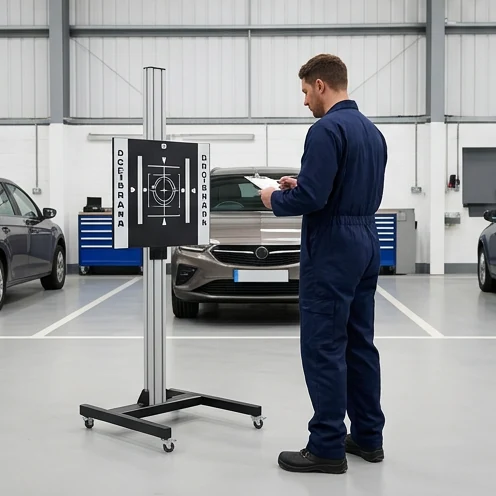
A customer may describe an ADAS concern as a warning light, an unexpected alert or a feature that behaves differently after another repair. Those descriptions are valuable evidence, but they do not tell the workshop which procedure is required or whether its equipment can perform it.
A dependable service process separates identification, assessment, any required calibration and documented verification. Make those boundaries clear to advisors, technicians and subcontractors. This article concerns job planning and records; it does not provide calibration instructions or substitute for manufacturer procedures.
Identify the actual system
Start with vehicle identification and the customer’s description in their own words. Ask when the concern appeared, what other work or damage preceded it and which feature they mean. Preserve the difference between an observed warning and the customer’s interpretation of its cause.
NHTSA’s driver-assistance overview distinguishes systems that warn the driver from systems that intervene, and notes that manufacturers use different names. Use the owner’s information and current vehicle-specific service information to resolve terminology. A generic label such as “lane assist” is not enough to define a repair operation.
Assign procedure research before quoting completion
Have the competent technician identify the applicable manufacturer instructions and prerequisites for the exact vehicle and work performed. Record the reference and its revision or access date where practical. Do not assume one trigger list or procedure applies across all brands.
Separate the cost and authorization of assessment from any later work. Explain what must be established before a firm completion promise is possible. A scan report, calibration result and release check serve different purposes in the job record; do not collapse them into a single tick box called “ADAS done.”
Verify equipment and environmental requirements
Confirm that the available tools, software access, targets and workspace meet the procedure’s requirements. Include training and competence in that check. Equipment ownership is only one part of readiness, and a general compatibility claim may not cover the precise function being requested.
If prerequisites cannot be met, pause the affected operation and arrange a suitable alternative. Do not alter the procedure merely to fit the workshop’s floor space or appointment length. The equipment investment guide explains how to assess coverage and facility dependencies before purchasing a new system.
Design the subcontractor handoff
If another business performs the work, agree what information travels with the vehicle and what evidence comes back. Include the requested scope, vehicle details, relevant repairs, known concerns and unresolved prerequisites. Identify who communicates changes to the customer and who can authorize additional work.
For example, a partner may discover that the booked operation cannot proceed because a prerequisite has not been satisfied. The process should return a specific reason and a next decision—not a vague “failed” status. Keep the original request, the partner’s findings and subsequent authorization connected to the repair order.
Review evidence before release
Assign a competent reviewer to check that the documented work matches the authorized scope and applicable procedure. Resolve missing reports or unexplained results before representing the work as complete. Preserve limitations and unresolved concerns in the customer-facing explanation without implying that paperwork itself proves system performance.
Never test a collision-avoidance feature by deliberately creating a dangerous road situation. Any required operational verification belongs within the manufacturer’s procedure, safe conditions and the technician’s competence. Clear records support accountability; they are not a substitute for performing the required checks.
Make the customer explanation precise
Explain what was assessed, what was performed and what remains unresolved. Use the manufacturer’s owner guidance when discussing feature limitations. Avoid promises that a repaired driver-assistance system makes a vehicle autonomous or removes the driver’s responsibility.
Review one recent handoff using the repair-order guide, then bring the required documents and decision points to a SaSa Shop OS demo. Verify current recordkeeping support. Do not assume direct calibration-tool integration, technical procedure coverage or compliance certification from a shop-management interface.