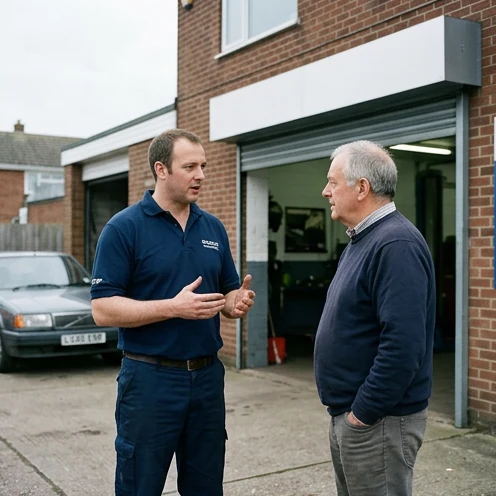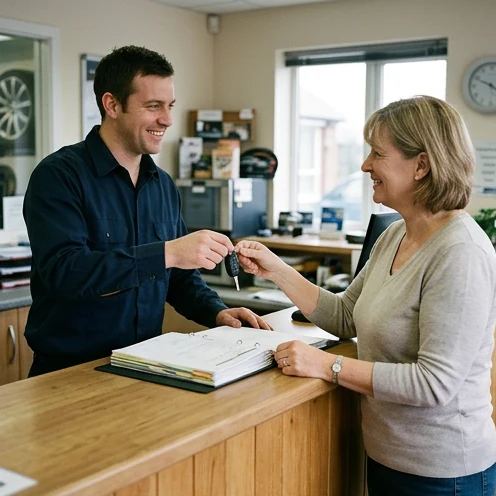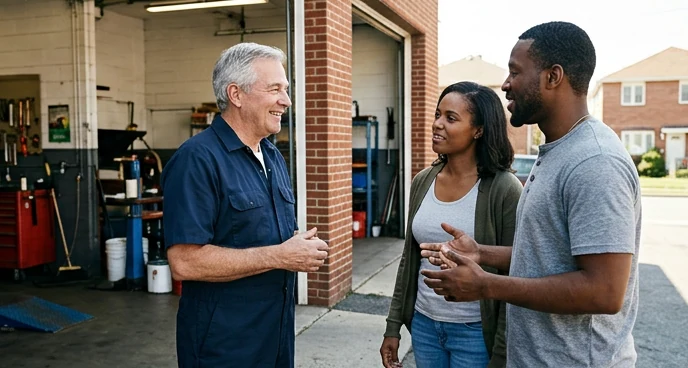
A workshop’s local reputation is built partly through repairs and partly through how it participates in everyday community life. Sponsoring an event can make the name visible, but visibility alone does not explain why someone should trust the business with a vehicle.
Choose participation that is useful, credible and manageable for the team. The goal is to make the workshop’s values observable without manufacturing testimonials or turning every interaction into a sales pitch. A small commitment delivered consistently is more convincing than an ambitious program the business cannot maintain.
Choose a contribution that fits your competence
Identify a real local need that the workshop can help address. Possibilities include a non-technical ownership-information session, a carefully planned careers conversation or support for an established community organization. Ask the intended participants what would be useful before deciding the format.
Stay within appropriate boundaries. An educational event should not become an improvised safety inspection or a promise of free technical diagnosis. Define what the activity includes, who is responsible and when a participant should seek a proper workshop assessment instead of general guidance.
Make the commitment operationally realistic
Assign a coordinator, a budget and a capacity limit. Account for preparation, staffing, materials and follow-up, not only the public-facing event. Check permissions, insurance and safeguarding requirements where relevant, especially when involving minors or hosting people in a working workshop.
Keep visitors separate from active work and use a suitable venue when the premises are inappropriate. Discuss practical constraints with the partner organization early. Cancelling repeatedly because the shop is busy can undermine the trust the activity was meant to build.
Explain the business through useful information
Use clear service boundaries, contact details and booking expectations. Help people understand how an estimate, authorization and update process works without claiming that every vehicle concern can be resolved immediately. Practical clarity is a stronger introduction than unsupported claims of being the best workshop in town.
For example, a short session could explain what information helps an advisor book an assessment: vehicle details, the observed concern and relevant history. It should not tell attendees to ignore warnings or diagnose safety-critical issues themselves. The customer communication guide supports that clarity.
Ask permission before turning participation into content
Agree with the organizer how names, photographs and logos may be used. Obtain appropriate permission before publishing identifiable participants, customer vehicles or personal stories. Do not imply that an organization endorses the workshop merely because it accepted support.
If you share feedback, preserve its meaning and make sure you have the right to publish it. Never invent quotes or present employees, friends or unrelated images as satisfied customers. Separate a factual event recap from an advertising claim, and follow applicable disclosure requirements for sponsored or compensated promotion.
Follow up without creating an unwanted mailing list
Give participants a clear, voluntary way to ask for information or book a suitable service. Do not assume an event attendance list grants marketing permission. Explain what follow-up people are choosing and honor their communication preferences and applicable privacy requirements.
If a participant becomes a customer, deliver the same documented service standard as any other customer. Community involvement should not compensate for missed updates or unclear invoices. The customer-retention guide and local marketing guide connect public visibility with the actual workshop experience.
Review usefulness before reach
Ask the partner and participants whether the activity met its purpose. Review staff effort, unanswered questions and any operational problems. Track resulting suitable inquiries where you can do so responsibly, but do not reduce a community relationship to a promised conversion rate.
Begin with one modest commitment and a named owner. Bring the resulting inquiry and communication workflow to a SaSa Shop OS discussion, confirming current support. Do not assume event management, marketing automation or consent-management features are available unless they have been explicitly verified.