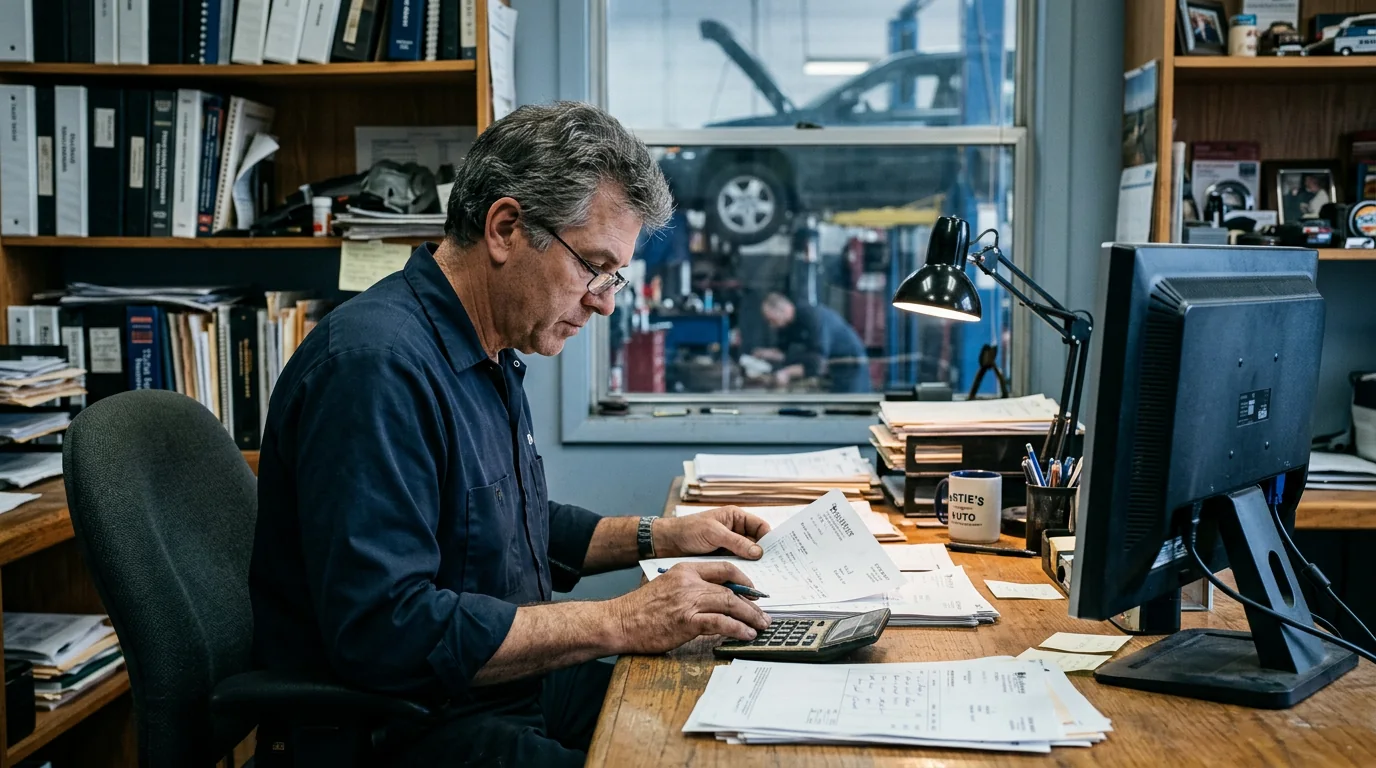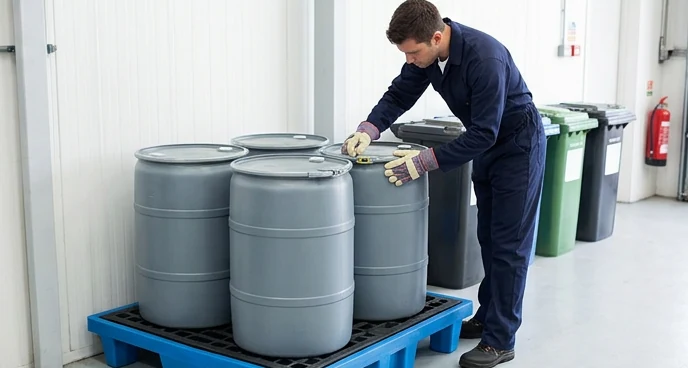
Responsible waste handling is a daily operating process, not a line item added to an invoice. A workshop needs to know which materials it generates, where they go, who checks storage and what evidence shows collection or disposal. Customers also deserve a clear explanation of any associated charge.
Start by separating environmental responsibilities from pricing choices. Paying a contractor or collecting a fee does not automatically establish compliance. Requirements vary by material, quantity, activity and jurisdiction, so build the process with qualified local advice rather than relying on a universal checklist.
Map the materials your services generate
Walk through each service category and list its waste streams, consumables and storage points. Include used fluids, filters, batteries, tires, contaminated materials and packaging as applicable. Do not assume that everything produced during an oil service can enter the same container or collection route.
Assign an owner to confirm classification and handling requirements with the relevant authority or qualified contractor. Record uncertainties for resolution before adding a new service. A new chemical or vehicle technology can change requirements even if the workshop’s overall size stays the same.
Make storage ownership visible
Identify who inspects containers, checks labels, monitors capacity and arranges collection. Establish an escalation route for leaks, damage, mixed materials or a missed pickup. Give staff the training and information relevant to their actual responsibilities.
For U.S. operations, EPA’s used-oil guidance for businesses covers storage, labeling, spill response and related requirements, while warning that state rules may be stricter. Use it as a starting reference and confirm local obligations. Do not infer that rules for used oil apply identically to solvents, coolant or other waste.
Check contractors and keep the handoff record
Confirm that each collection provider is suitable and authorized for the materials and service involved. Agree what documentation the workshop receives and who verifies it. Keep collection records connected to the relevant storage stream and period, not scattered across individual employees’ inboxes.
Review discrepancies promptly. A collection invoice with an unexpected description may signal a billing error or a misunderstanding about the material accepted. Ask for clarification rather than assuming that a completed pickup resolves every responsibility. Recheck arrangements when services, volumes or contractors change.
Price transparently and lawfully
Review actual consumable and waste-management costs with the person responsible for pricing. Decide, with appropriate local advice, whether costs belong in service prices or may be charged separately. Check rules on disclosure, taxation and how mandatory or discretionary charges must be described.
Do not describe a shop-imposed fee as a government tax unless that is accurate. Explain the amount or calculation before approval where required, and keep the estimate and invoice consistent. The invoice checklist helps prevent a charge from appearing for the first time after work is finished.
Avoid unsupported environmental promises
Make claims specific to activities you can substantiate. Keeping collection records for a defined material is different from claiming the entire workshop is zero-waste or carbon-neutral. Do not turn a contractor’s general marketing statement into a claim about every item your shop sends away.
An illustrative service review might show frequent disposal of unused consumables because purchasing quantities exceed demand. Reducing that mismatch can be a practical improvement without inventing an emissions-saving statistic. The parts-inventory guide offers a useful framework for monitoring usage and stock decisions.
Run a recurring responsibility check
Review storage, overdue collections, missing documentation, staff training and upcoming service changes at a defined interval. Assign actions and deadlines rather than recording only that the area looked tidy. Include emergency-response arrangements in the competent safety review; this business guide is not a spill-response procedure.
Start with one waste stream and trace it from the job to collection documentation. Bring the administrative requirements to a SaSa Shop OS discussion and verify what the current product supports. Do not assume waste tracking, environmental reporting or regulatory compliance functionality is available.