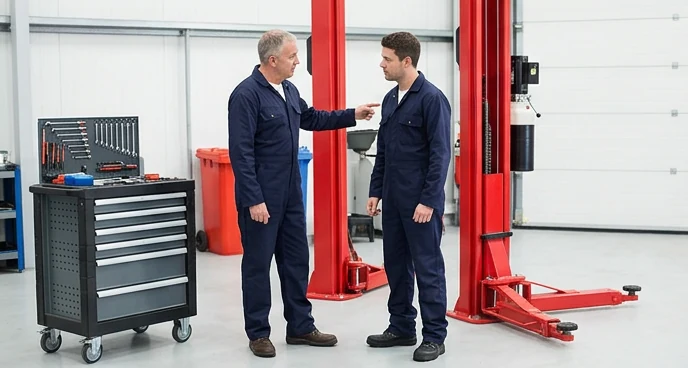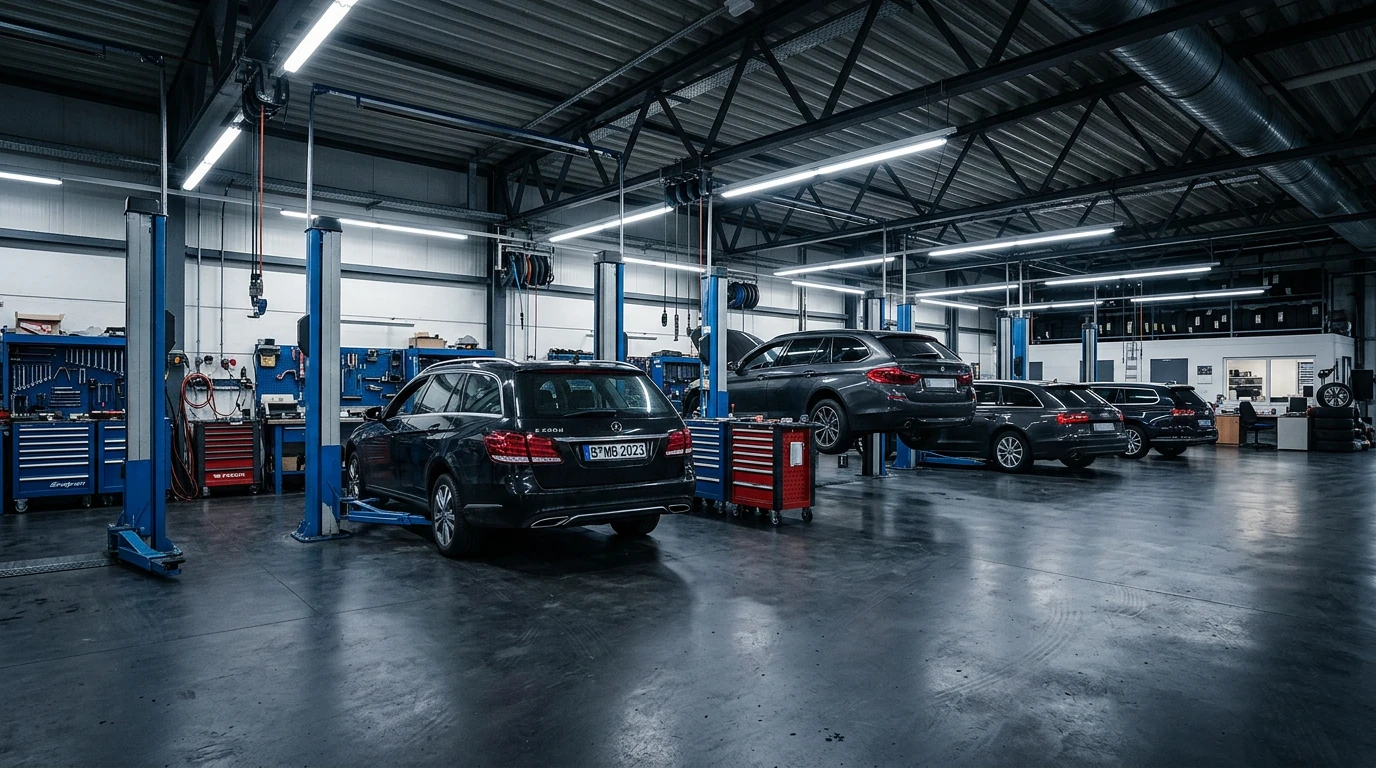
“We service electric vehicles” is too broad to be a useful operating policy. A workshop might be prepared for a defined maintenance task on a particular model while being unequipped for battery damage, high-voltage diagnostics or another manufacturer’s requirements. Readiness belongs to the task, vehicle and people involved—not just the sign outside.
Treat EV expansion as a controlled service decision. Build an acceptance matrix, identify the evidence needed to approve each service and establish what the workshop will refer elsewhere. This is a business-planning guide, not a high-voltage work instruction or a qualification to perform repairs.
Start with the vehicles customers actually bring
Review recent inquiries and existing customers’ vehicles. Separate confirmed demand from general interest, and record the specific requested tasks. A forecast based on local evidence is more useful than assuming every EV owner needs the same services.
For each proposed service, identify the supported makes, models and configurations. Ask what changes when the vehicle arrives with damage, a warning message or an unknown service history. Keep acceptance criteria visible to advisors so the booking conversation reflects the workshop’s current capability.
Match competence to the task
The UK Health and Safety Executive’s electric and hybrid vehicle guidance distinguishes lower-risk activities, recovery, maintenance outside high-voltage systems and work on high-voltage systems. It also stresses manufacturer-specific information and the different competence required for different work.
Use that distinction when planning training, while confirming the requirements applicable in your jurisdiction. A general awareness course should not be represented as permission for every EV repair. Record who is competent for each accepted task, what evidence supports that decision and who reviews capability when personnel or vehicle coverage changes.
Check the whole facility, not just the toolbox
Before buying equipment, ask a qualified specialist to assess the proposed work, premises and controls. Consider access restrictions, vehicle movement, lifting requirements, emergency arrangements and the handling of damaged vehicles. Do not improvise battery storage or recovery procedures from a general internet checklist.
Include the cost of current service information, equipment inspection, training refreshers and specialist support in the business case. Obtain written clarification of equipment coverage. A tool being marketed for EVs does not establish that it supports the particular vehicle, function and procedure you intend to sell.
Make intake an escalation point
Collect the exact vehicle identity, customer concern, recent damage and relevant warning information before confirming an ordinary appointment. Give staff a clear way to escalate uncertain cases without promising that the vehicle can be accepted or safely driven.
An illustrative customer request for routine maintenance may become a different case when the customer mentions recent underside damage. The useful operational response is to pause the standard booking and refer the information to the competent lead. It is not to diagnose the damage remotely or instruct an untrained customer to inspect high-voltage components.
Establish referrals before needing them
Identify specialist partners for work beyond your scope and agree the handoff information they need. Confirm responsibility for estimates, customer communication, transport and subsequent release. Explain third-party involvement and obtain the relevant approvals rather than presenting a referral as an in-house capability.
Check insurance and contractual implications before offering the new service. The equipment investment guide can help organize costs and coverage questions, while industry change planning provides a framework for reviewing demand without chasing every technology headline.
Publish only the service boundaries you can support
Write website and booking copy from the approved acceptance matrix. Avoid unqualified claims such as servicing all EVs or handling every battery concern. Revisit the matrix after a pilot, a new model request, a staffing change or revised manufacturer information.
Start with one defined service and document the booking-to-release process. Use a SaSa Shop OS demo to assess how your required records and handoffs fit the current product. Shop-management software does not confer EV competence, establish safe working procedures or replace vehicle-specific technical information.