A motorcycle workshop needs more than a smaller version of an automotive job card. Vehicle handling, model-specific information, customer modifications and road-test arrangements can change the practical requirements of a job. A familiar symptom does not make an unfamiliar motorcycle a suitable booking.
Build the service plan around the work your team is competent and equipped to perform. Define accepted models and operations, then make intake, authorization and release consistent. This article does not teach braking, suspension, tire or other safety-critical repair procedures.
Make model coverage a booking decision
List the manufacturers, model families and tasks the workshop supports. Identify where current service information, diagnostic access, special tools or additional training are necessary. Keep a referral option for requests that fall outside those boundaries.
Before confirming a job, capture the exact vehicle identity and relevant configuration. Ask about modifications and customer-supplied parts without assuming either is suitable. An appointment should reflect confirmed capability, not the hope that a technician can research an unfamiliar system while the motorcycle occupies limited workshop space.
Record the concern and the intended use
Ask the rider to describe what happens, when it happens and what changed before the concern appeared. Separate that account from a requested repair. “Replace the caliper” and “the brake feels different after storage” are not equivalent instructions.
Note relevant use and recent work without making a remote diagnosis. If there is a possible safety concern, have a competent person advise on appropriate next steps and transport; do not casually recommend riding to the appointment. Keep initial assessment authorization distinct from approval for subsequent repair work.
Plan handling, space and custody
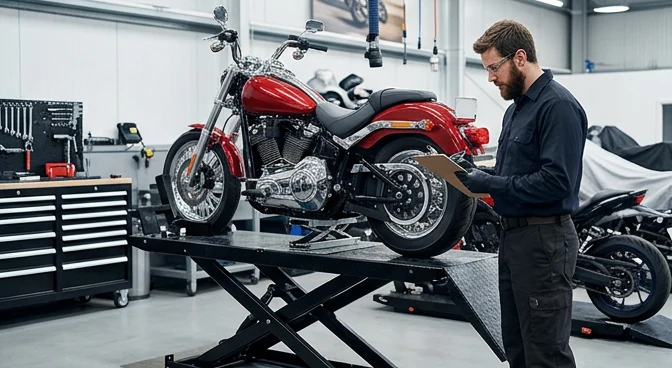
Confirm that lifting, support and movement arrangements are suitable for the motorcycle and intended operation. Follow equipment and vehicle instructions rather than improvising adapters or relying on a generic capacity number. Plan secure storage for the vehicle, keys, removed parts and customer accessories.
Schedule enough space for work awaiting parts, not just active technician time. Seasonal demand can make storage a constraint long before every technician is fully booked. Agree pickup expectations and any lawful storage terms in advance, and communicate changes rather than surprising the customer later.
Check parts before disassembly commitments
Verify part identity, compatibility, availability and return conditions before making a completion promise. Where a repair requires assessment after disassembly, explain that uncertainty and the decision point for further authorization. A catalog illustration should not be treated as proof that every variant uses the same component.
For a hypothetical older motorcycle, the customer may request a component rebuild when approved replacement parts or current procedures are not available. The workshop should assess the permissible options and explain limitations rather than promise that rebuilding is always cheaper or appropriate. See parts purchasing for recordkeeping structure.
Define the verification and road-test process
Have competent staff identify the manufacturer-required completion checks for the specific work. Record results and unresolved issues clearly. Road tests, where required and appropriate, need a defined policy covering rider qualification, authorization, insurance, conditions and the purpose of the test.
A customer signature does not make an unsafe vehicle safe or replace the workshop’s obligations. Do not release a job as complete merely because a requested part was installed. Escalate concerns and obtain professional guidance where necessary. The risk and insurance guide helps prepare questions about these operational exposures.
Make handover useful for the next visit
Explain the completed work, any limitations and verified follow-up guidance. Keep recommendations traceable to the vehicle’s requirements and findings rather than prescribing the same interval to every rider. Record relevant modifications and parts details so the next assessment does not begin from memory.
Audit one recent job for missing decisions between booking and pickup. Bring an anonymized record to a SaSa Shop OS discussion and verify current support for your workflow. Do not assume motorcycle-specific technical data, diagnostic integrations or model coverage until they have been demonstrated and confirmed.